“A scar that keeps growing”
Keloid & Raised Scar Treatment
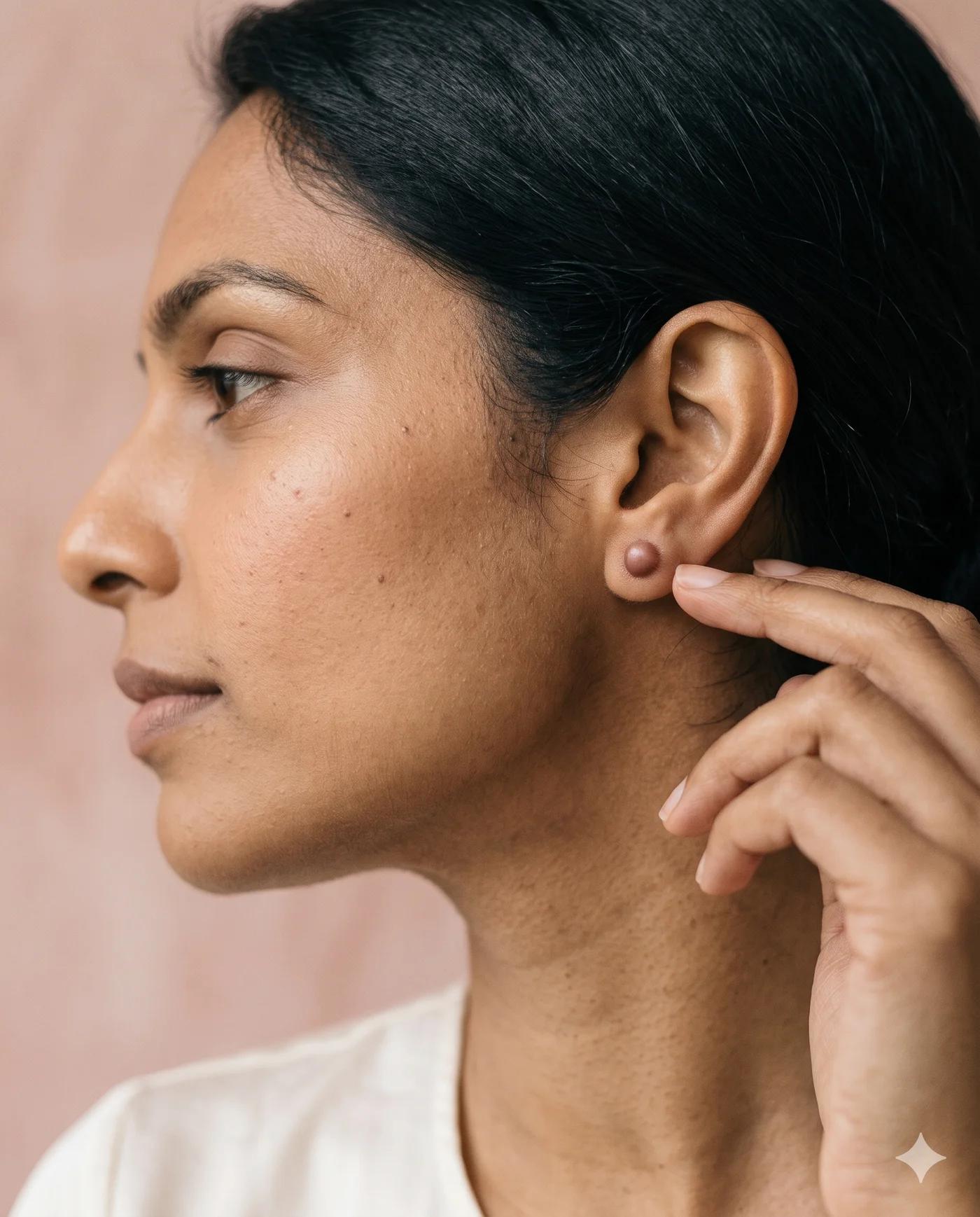
Keloids are thick, raised scars that grow beyond the original wound, often after acne, piercings, vaccinations or surgery. They can itch and hurt. They are more common in darker skin, and they need a different approach from ordinary scars.
Medically reviewed by Dr. Pradeep, MD, MBA
Understand it first
What is usually behind it
- Keloids
- Firm, shiny scars that spread beyond the original injury and rarely settle on their own.
- Hypertrophic scars
- Raised scars that stay within the wound area and often soften over time.
- Common sites
- Chest, shoulders, upper back, earlobes and jawline.
Our approach
How we treat it
Injections into the scar are the main treatment, flattening and softening it over several sessions, supported by silicone gel or sheets. We avoid cutting out keloids on their own, because they tend to return larger. Early treatment of any regrowth keeps results stable.
Treatments we may discuss
Questions
What people ask us
Why do I get keloids?
Keloids run in families and are more common in darker skin. The skin over-produces collagen while healing, especially on the chest, shoulders and earlobes.
How many injections will I need?
Usually three to six, four to six weeks apart, depending on the size and age of the keloid.
Can I get a piercing if I have had keloids?
It is safest to avoid new piercings, because the risk of another keloid is high.
This page is general information, not a diagnosis or personal medical advice. Suitability, risks, recovery and results vary and are confirmed only after an in-person assessment by a doctor. No particular result is guaranteed.
The first step is a conversation
Not sure which applies to you? That is our job.
A consultation is time with a doctor: your concern, your options, the risks and the likely cost. There is no obligation to book a treatment, and we will tell you if you do not need one.