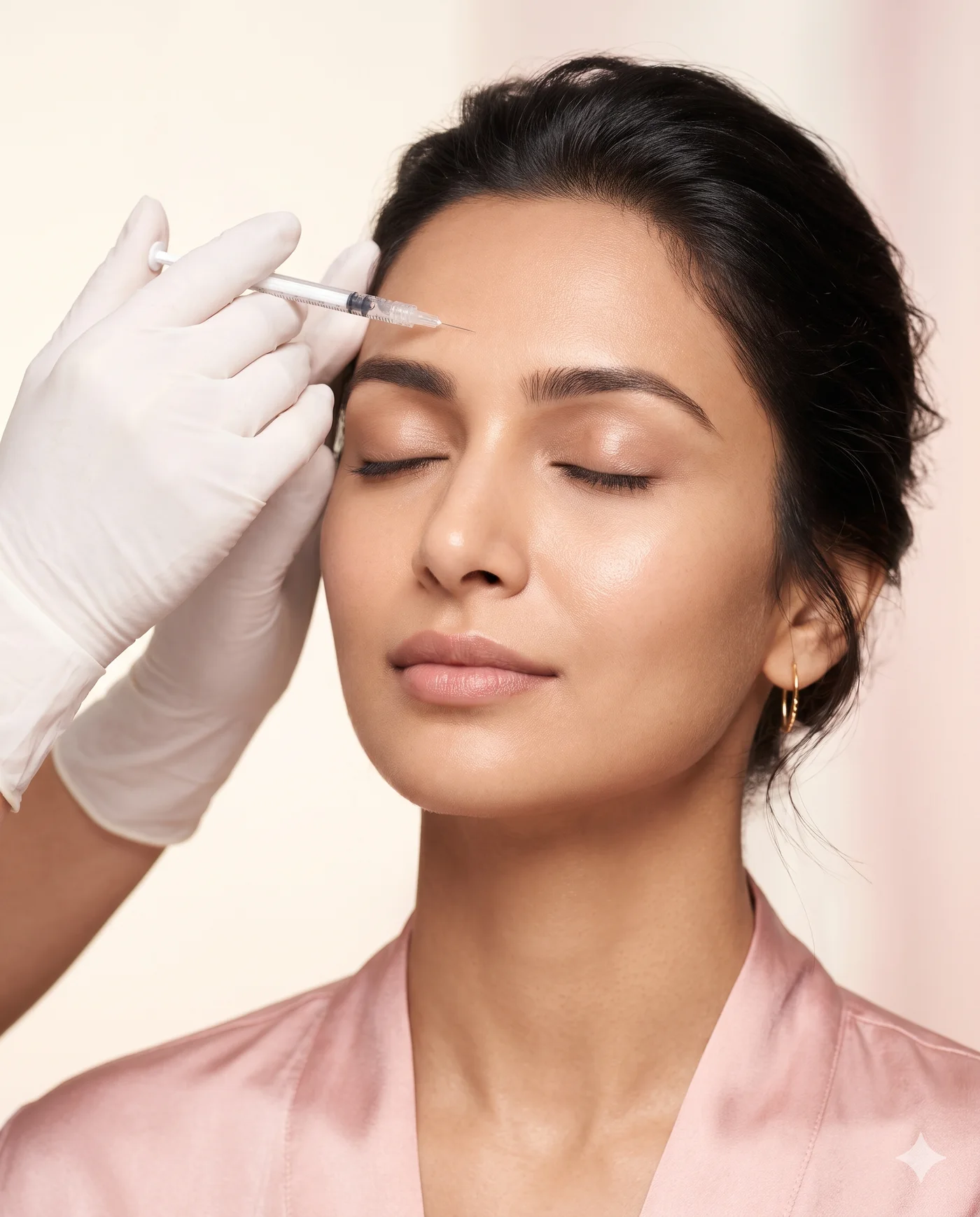
What is Botox?
Botulinum toxin is injected in very small amounts into the muscles that crease the skin when you frown, squint or raise your brows. Those muscles relax, so the lines above them soften. A careful dose keeps your expressions; the aim is that you look rested, not different.
Also known as: Botulinum toxin, Anti-wrinkle injections, Neuromodulator, Micro-Botox, Baby Botox, Masseter Botox
How it works
The medicine temporarily blocks the signal between a nerve and a muscle. The muscle contracts less, and the skin over it stops folding as deeply. The effect wears off gradually as the nerve signal returns.
Concerns it is used for
What to expect
- Before
Your doctor watches how your face moves, marks the points and agrees the dose with you before anything is injected.
- During
A few quick pinpricks with a very fine needle. Most people do not need numbing cream.
- After
Results appear over 3 – 14 days. Stay upright for four hours and skip the gym and facials for a day.
Risks and honest caveats
Small bruises and a mild headache can occur. Uncommonly, a brow or eyelid can drop for a few weeks if the medicine spreads; this settles on its own. Not suitable in pregnancy, while breastfeeding, or with certain nerve and muscle conditions.
Your doctor will go through these with you, along with the alternatives, before you decide.
Who should avoid it
Not given during pregnancy or breastfeeding, with an infection at the injection site, or in people with certain nerve and muscle disorders such as myasthenia gravis. Tell your doctor about all medicines, particularly blood thinners and some antibiotics.
How it compares
Botox vs fillers
They do different jobs. Botox relaxes muscles to soften lines caused by movement, such as frown lines. Fillers add volume and structure where it has been lost, such as lips and cheeks. Many faces need a little of each, in different places.
What affects the cost of Botox
The cost is individual, because no two plans are the same. You are given a written figure at your consultation, before you commit to anything. It depends on:
- The area or number of areas treated
- The amount and brand of product used
- How many sessions your plan needs
- Whether treatments are combined in one visit
Common questions about Botox
What is Botox?
Botox is a brand name for botulinum toxin type A, a purified protein injected in tiny doses to relax specific muscles. In aesthetics it softens lines caused by repeated expression, and it is also used for jaw clenching, a gummy smile and excessive sweating.
What is Baby Botox or Micro-Botox?
Both terms mean using smaller doses than usual. Baby Botox places low doses in the usual muscles for a softer effect that keeps more movement. Micro-Botox places very dilute product superficially in the skin to refine texture and pores.
Can Botox slim the jaw or lift the neck?
Yes. Botox in the jaw muscle slims a square jaw and eases clenching, and Botox along the neck bands (the Nefertiti lift) softens neck cords and sharpens the jawline. Each has its own page with details.
Does Botox hurt?
The needle is very fine and each injection takes a second. Most people describe a brief pinch and do not need numbing cream.
How long does Botox take?
A session usually takes 15 – 25 minutes. A few quick pinpricks with a very fine needle. Most people do not need numbing cream.
Is there any downtime after Botox?
None for most people. Results appear over 3 – 14 days. Stay upright for four hours and skip the gym and facials for a day.
How many sessions of Botox will I need?
One visit, with a review at two weeks. The exact number depends on your assessment and how you respond.
How long do the results of Botox last?
Usually 3 – 4 months. Results vary from person to person and are not guaranteed.
What are the risks of Botox?
Small bruises and a mild headache can occur. Uncommonly, a brow or eyelid can drop for a few weeks if the medicine spreads; this settles on its own. Not suitable in pregnancy, while breastfeeding, or with certain nerve and muscle conditions.
This page is general information, not a diagnosis or personal medical advice. Suitability, risks, recovery and results vary and are confirmed only after an in-person assessment by a doctor. No particular result is guaranteed.