What is Body pigmentation?
Darker skin in body folds is very common and has several causes: friction, shaving, deodorants, weight and hormones. Treatment combines gentle peels and laser with the right creams, and where a dark, velvety neck suggests insulin resistance, we arrange the appropriate tests too.
Also known as: Dark underarm treatment, Dark neck treatment, Acanthosis nigricans treatment, Body brightening, Intimate area lightening
How it works
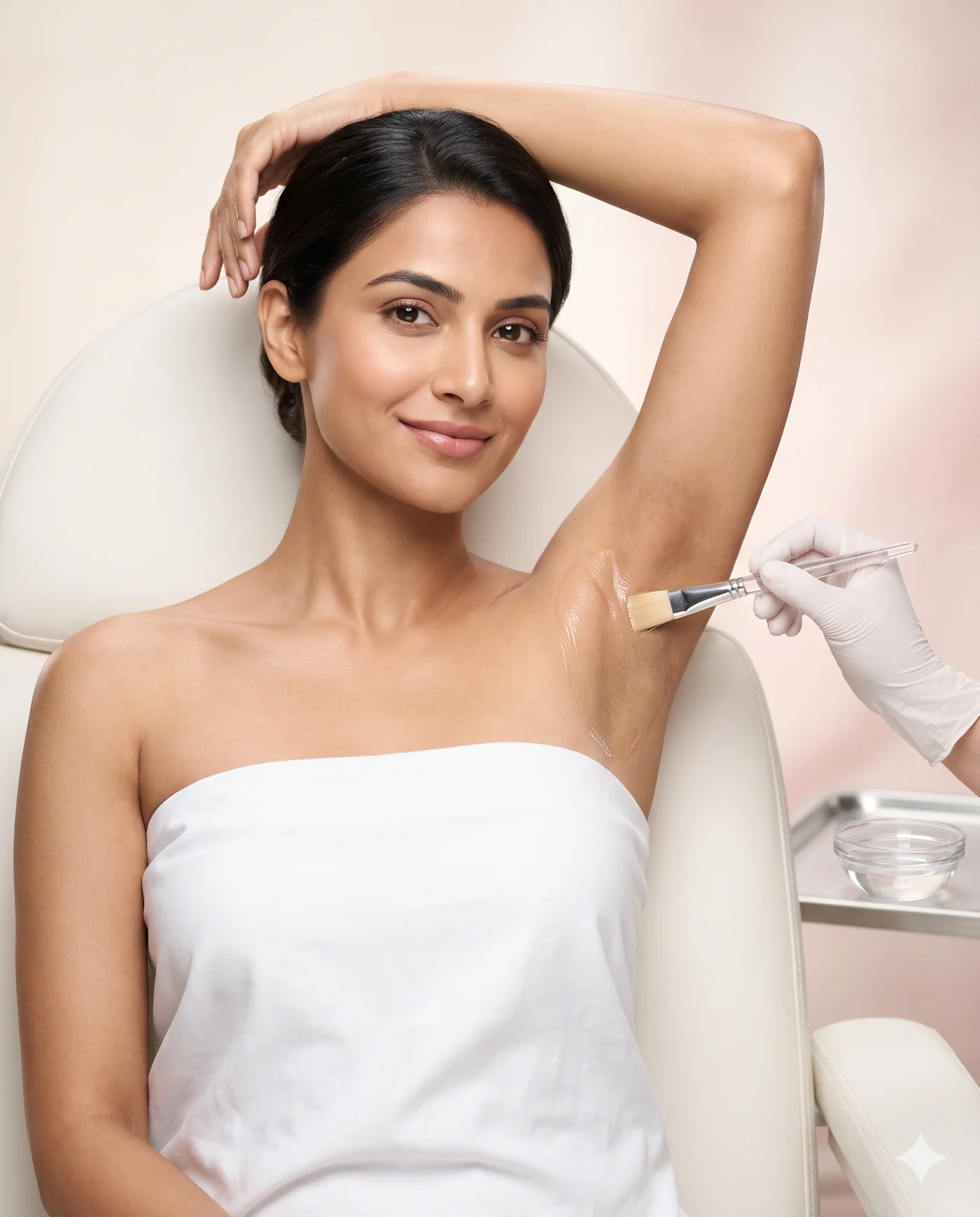
Peels remove the thickened surface layer and laser targets pigment, while prescribed creams slow down new pigment production.
Concerns it is used for
What to expect
- Before
We look for the cause first. A dark, thickened neck can be an early sign of insulin resistance and deserves a blood test.
- During
A peel, laser or both, chosen for the area.
- After
Reduce friction, switch from waxing or harsh deodorants where advised, and use the creams prescribed.
Risks and honest caveats
Improvement is gradual and usually partial rather than complete. If a hormonal or metabolic cause is not addressed, the pigment tends to return. Irritation is possible in sensitive folds.
Your doctor will go through these with you, along with the alternatives, before you decide.
Who should avoid it
Peels and laser are postponed with active rashes, infection or recent waxing in the area, and some are avoided in pregnancy.
How it compares
Clinic treatment vs lightening creams
Over-the-counter lightening creams often contain steroids or other ingredients that can thin and damage skin with long use. Clinic treatment uses supervised peels, laser and prescribed creams, and looks for the underlying cause.
What affects the cost of Body pigmentation
The cost is individual, because no two plans are the same. You are given a written figure at your consultation, before you commit to anything. It depends on:
- The area or number of areas treated
- The amount and brand of product used
- How many sessions your plan needs
- Whether treatments are combined in one visit
Common questions about Body pigmentation
What is acanthosis nigricans?
Acanthosis nigricans is a darkening and thickening of the skin, giving it a velvety feel, most often on the neck, underarms and groin. It is commonly linked to insulin resistance and weight.
Why are my underarms dark?
Common causes include friction, shaving or waxing irritation, deodorant reactions, weight and hormonal factors. Treating the cause is as important as treating the colour.
How long does Body pigmentation take?
A session usually takes 30 – 45 minutes. A peel, laser or both, chosen for the area.
Is there any downtime after Body pigmentation?
None to mild dryness. Reduce friction, switch from waxing or harsh deodorants where advised, and use the creams prescribed.
How many sessions of Body pigmentation will I need?
Usually 4 – 6, 2 – 4 weeks apart. The exact number depends on your assessment and how you respond.
How long do the results of Body pigmentation last?
Lasts when the underlying cause is managed. Results vary from person to person and are not guaranteed.
What are the risks of Body pigmentation?
Improvement is gradual and usually partial rather than complete. If a hormonal or metabolic cause is not addressed, the pigment tends to return. Irritation is possible in sensitive folds.
This page is general information, not a diagnosis or personal medical advice. Suitability, risks, recovery and results vary and are confirmed only after an in-person assessment by a doctor. No particular result is guaranteed.