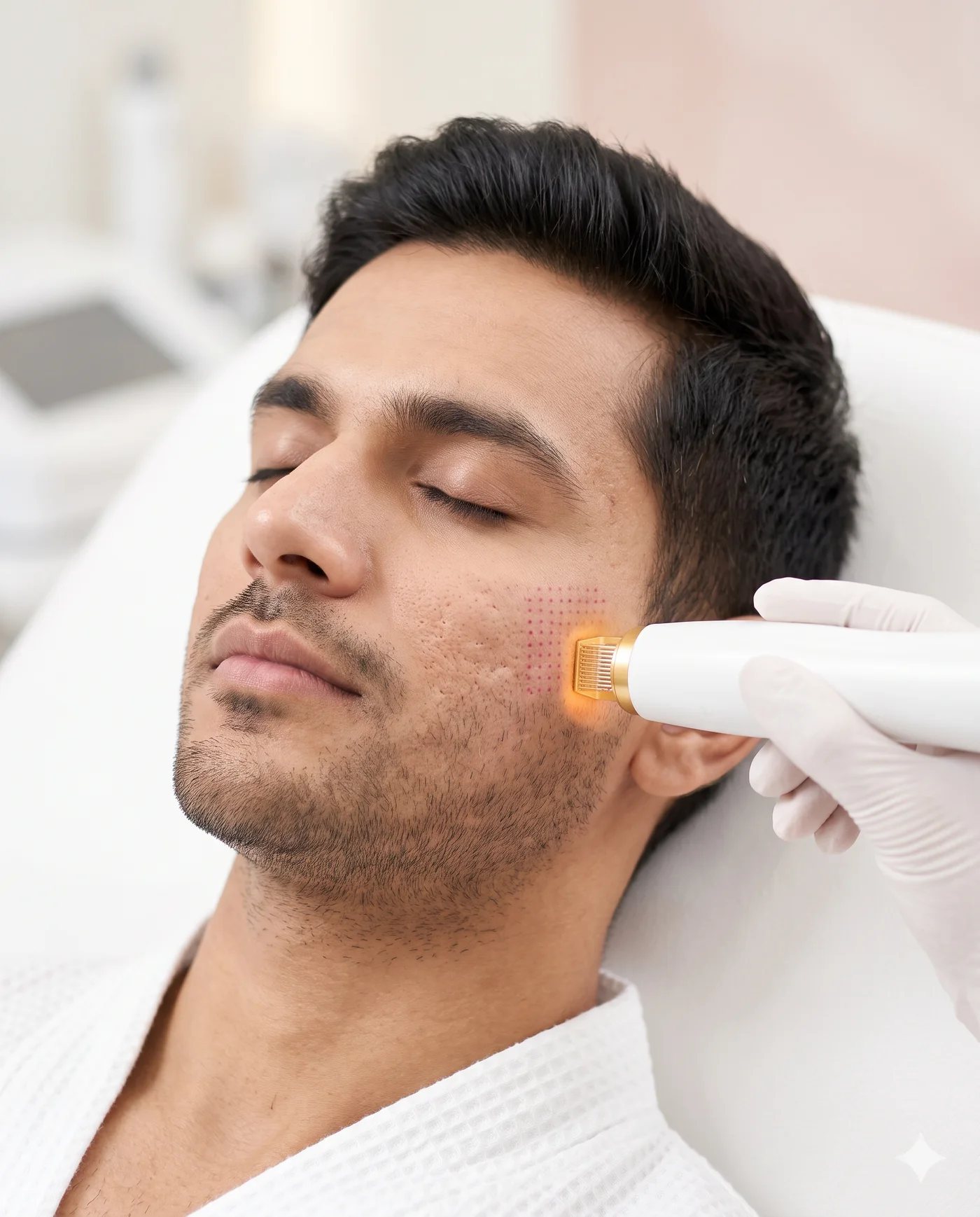
What is RF microneedling?
Radiofrequency microneedling uses fine needles to deliver heat into the deeper skin, prompting it to remodel. For scars that are pulled down from beneath, it is paired with subcision, where the doctor releases the bands tethering the scar. Together they treat the scar from below and above.
Also known as: MNRF, Microneedling radiofrequency, RF microneedling, Fractional RF, Subcision, Acne scar treatment
How it works
Controlled heat in the deeper skin triggers new collagen. Subcision cuts the fibrous strands that hold a scar down, letting the surface rise.
Concerns it is used for
What to expect
- Before
Your scars are mapped by type, because each type responds to a different technique.
- During
Strong numbing cream, and local anaesthetic for subcision. You feel heat and pressure.
- After
Redness for a few days. Improvement continues for three months after each session.
Risks and honest caveats
Expect improvement, not erasure: scars become shallower and softer. Swelling, bruising and temporary marks are common. Darkening of the skin is possible and is managed with sun protection and creams.
Your doctor will go through these with you, along with the alternatives, before you decide.
Who should avoid it
Not done during pregnancy, with active acne infection, cold sores, a pacemaker or metal implants in the area, or in people prone to keloid scars. Isotretinoin usually needs to be stopped for a period first.
How it compares
MNRF vs fractional CO2 laser
Both remodel scars. Fractional CO2 laser removes columns of skin from the surface and has more recovery and a higher risk of darkening on Indian skin. MNRF delivers heat beneath the surface through needles, sparing the top layer, which makes it a common choice for darker skin tones.
What affects the cost of RF microneedling
The cost is individual, because no two plans are the same. You are given a written figure at your consultation, before you commit to anything. It depends on:
- The area or number of areas treated
- The amount and brand of product used
- How many sessions your plan needs
- Whether treatments are combined in one visit
Common questions about RF microneedling
What is MNRF?
MNRF stands for microneedling radiofrequency. Fine needles enter the skin and release radiofrequency heat at a set depth, which stimulates new collagen to improve scars, pores and texture.
What is subcision?
Subcision is a minor procedure in which a needle or cannula is passed under a depressed scar to cut the fibrous bands pulling it down, allowing the skin to rise.
Is MNRF safe for Indian skin?
It is widely used on Indian skin because the heat is delivered below the surface. Temporary darkening can still occur and is managed with sun protection and creams.
How long does RF microneedling take?
A session usually takes 60 minutes, including numbing. Strong numbing cream, and local anaesthetic for subcision. You feel heat and pressure.
Is there any downtime after RF microneedling?
2 – 4 days of redness and swelling; bruising if subcision is done. Redness for a few days. Improvement continues for three months after each session.
How many sessions of RF microneedling will I need?
Usually 3 – 4, spaced 4 – 6 weeks apart. The exact number depends on your assessment and how you respond.
How long do the results of RF microneedling last?
Scar improvement is long-lasting once achieved. Results vary from person to person and are not guaranteed.
What are the risks of RF microneedling?
Expect improvement, not erasure: scars become shallower and softer. Swelling, bruising and temporary marks are common. Darkening of the skin is possible and is managed with sun protection and creams.
This page is general information, not a diagnosis or personal medical advice. Suitability, risks, recovery and results vary and are confirmed only after an in-person assessment by a doctor. No particular result is guaranteed.