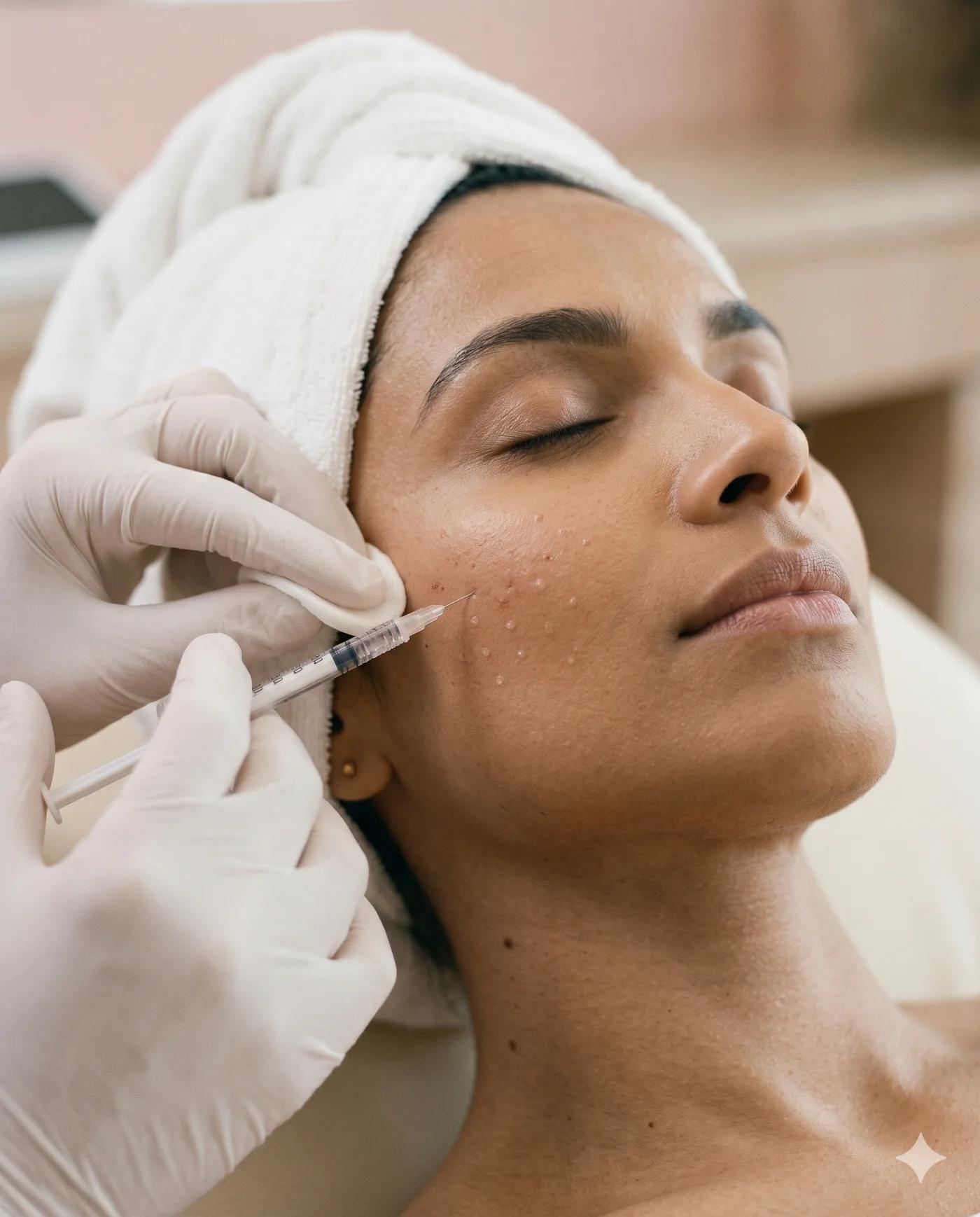
What is Skin Botox?
Skin Botox, also called micro-Botox or Microtox, uses a very dilute botulinum toxin placed just under the skin surface in many tiny points, rather than into the muscles. It calms oil glands and the fine muscle fibres attached to the skin, so pores look smaller, shine reduces and the surface looks smoother. Expressions are not frozen. It is especially popular in Korea and across Asia for a natural "glass skin" look.
Also known as: Micro-Botox, Microtox, Skin Botox, Mesobotox, Botox for pores, Glass skin Botox, Intradermal Botox
How it works
At this dilution and depth, the medicine mainly reduces the activity of oil glands and the tiny muscle fibres in the skin, rather than the deeper muscles of expression. Less oil and a smoother surface make pores look smaller and light reflect more evenly.
Concerns it is used for
What to expect
- Before
Assessment of your skin type, oiliness and pores, and whether skin Botox, a booster or a peel would suit you best.
- During
Numbing cream, then many very fine, shallow injections across the treated areas. Small bumps appear and settle within an hour.
- After
Oil and pore size improve gradually over one to two weeks. Avoid rubbing the face, saunas and heavy exercise for 24 hours.
Risks and honest caveats
Small bruises, tenderness and temporary bumps are common. If the medicine spreads to deeper muscles, a smile can feel slightly weak or uneven for a few weeks, which is why placement and dose matter. Not suitable in pregnancy, while breastfeeding, or with certain nerve and muscle conditions.
Your doctor will go through these with you, along with the alternatives, before you decide.
Who should avoid it
Not given during pregnancy or breastfeeding, over active acne or infection in the area, or with nerve and muscle disorders such as myasthenia gravis. Tell your doctor about all medicines, especially blood thinners and some antibiotics.
How it compares
Skin Botox vs regular Botox
Regular Botox is placed into the muscles that make expression lines, such as frown lines. Skin Botox is far more dilute and placed just under the surface across a wider area, to reduce oil and refine pores and texture without changing your expressions.
What affects the cost of Skin Botox
The cost is individual, because no two plans are the same. You are given a written figure at your consultation, before you commit to anything. It depends on:
- The area or number of areas treated
- The amount and brand of product used
- How many sessions your plan needs
- Whether treatments are combined in one visit
Common questions about Skin Botox
Will skin Botox freeze my face?
No. The medicine is very dilute and placed in the skin rather than the deeper muscles, so your expressions stay natural.
Does skin Botox shrink pores?
It does not change the pore itself, but by reducing oil and smoothing the surface it makes pores look noticeably smaller for three to four months.
Can skin Botox be combined with other treatments?
Yes. It is often combined with a skin booster such as Profhilo or a peel for both glow and oil control. Your doctor will plan the order and spacing.
How long does Skin Botox take?
A session usually takes 30 – 45 minutes, including numbing cream. Numbing cream, then many very fine, shallow injections across the treated areas. Small bumps appear and settle within an hour.
Is there any downtime after Skin Botox?
Tiny bumps for about an hour; occasional pinpoint bruises. Oil and pore size improve gradually over one to two weeks. Avoid rubbing the face, saunas and heavy exercise for 24 hours.
How many sessions of Skin Botox will I need?
One session; repeated every 3 – 4 months to maintain. The exact number depends on your assessment and how you respond.
How long do the results of Skin Botox last?
About 3 – 4 months. Results vary from person to person and are not guaranteed.
What are the risks of Skin Botox?
Small bruises, tenderness and temporary bumps are common. If the medicine spreads to deeper muscles, a smile can feel slightly weak or uneven for a few weeks, which is why placement and dose matter. Not suitable in pregnancy, while breastfeeding, or with certain nerve and muscle conditions.
This page is general information, not a diagnosis or personal medical advice. Suitability, risks, recovery and results vary and are confirmed only after an in-person assessment by a doctor. No particular result is guaranteed.