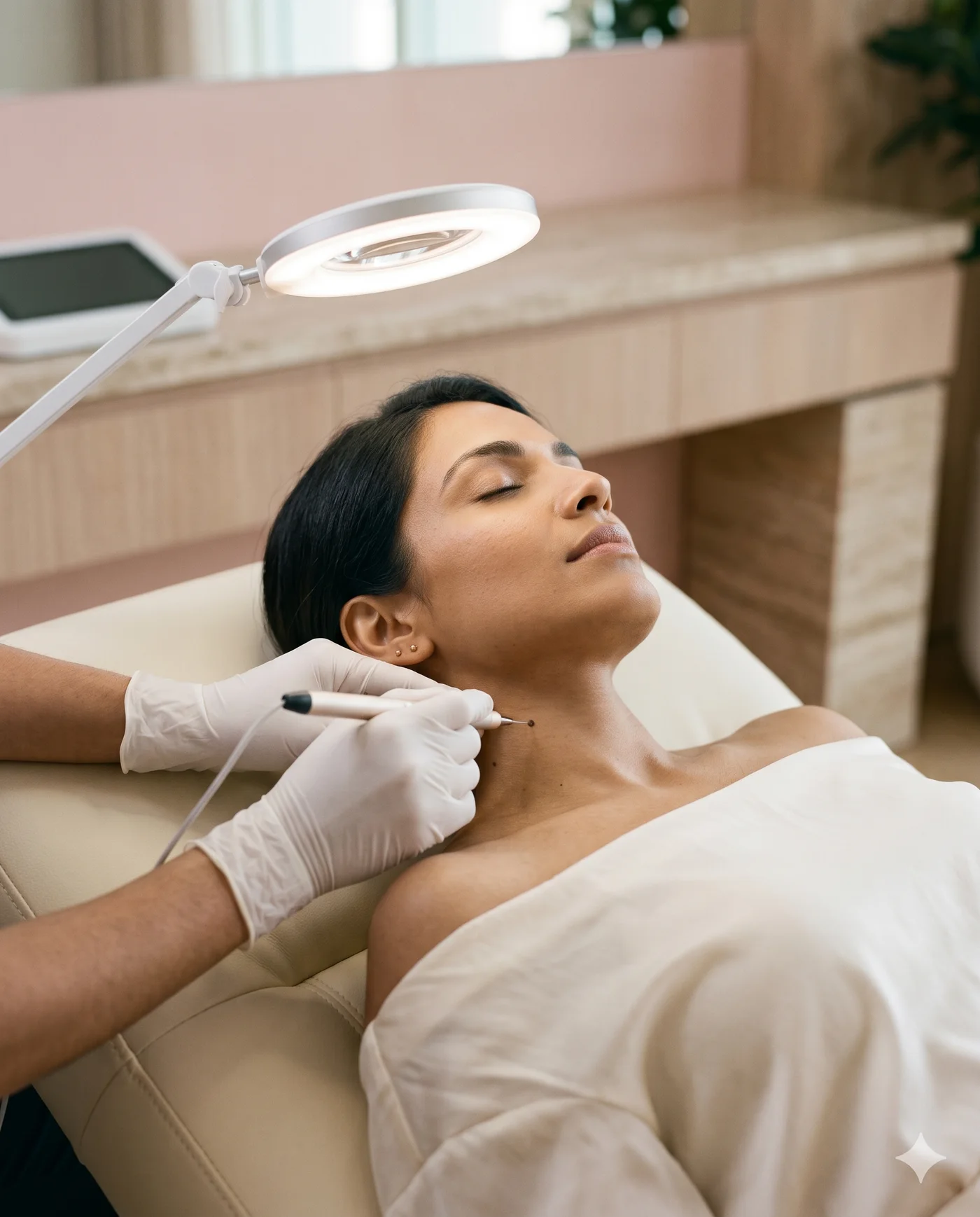
What is Skin growth removal?
Skin tags, warts, dermatosis papulosa nigra (small dark bumps common on Indian skin), milia and many other harmless growths can be removed in a short clinic procedure. A doctor first confirms what the growth is, because anything unusual or changing needs to be checked before removal.
Also known as: Skin tag removal, Wart removal, DPN removal, Milia removal, Mole removal, Radiofrequency cautery, Electrocautery
How it works
Depending on the growth, a fine radiofrequency or electrocautery tip, a sterile needle, or a precise chemical application is used to remove it at skin level, with care to protect the surrounding skin.
Concerns it is used for
What to expect
- Before
The doctor examines each growth. Any mole that is changing, bleeding or irregular is assessed separately and may need a biopsy.
- During
Numbing cream or a small injection of local anaesthetic is used, then each growth is removed.
- After
Keep the area clean and apply the ointment given. Do not pick the scabs, and use sunscreen while the skin heals.
Risks and honest caveats
Temporary darkening or lightening of the treated spots is the most common effect on Indian skin, and usually fades. Scarring and infection are uncommon. Warts are caused by a virus and can recur.
Your doctor will go through these with you, along with the alternatives, before you decide.
Who should avoid it
A growth that is changing, bleeding, itchy or irregular is not removed for cosmetic reasons until it has been properly assessed. Treatment is postponed over infected skin, and people prone to keloids are assessed carefully first.
How it compares
Clinic removal vs home removal
Home kits, threads, freezing sprays and acids often leave burns, infection or scars, and can hide a growth that should have been checked. In clinic the growth is identified first and removed precisely with sterile instruments.
What affects the cost of Skin growth removal
The cost is individual, because no two plans are the same. You are given a written figure at your consultation, before you commit to anything. It depends on:
- The area or number of areas treated
- The amount and brand of product used
- How many sessions your plan needs
- Whether treatments are combined in one visit
Common questions about Skin growth removal
What is DPN?
Dermatosis papulosa nigra is a harmless condition common in brown and Black skin, with many small dark bumps on the cheeks, eyelids and neck. It often runs in families and increases with age.
Will the spots leave marks?
Small dark or light marks are common at first on Indian skin and usually fade over weeks to months with sunscreen. Picking scabs increases the risk of lasting marks.
Can moles be removed?
Many can, after a doctor has checked them. Any mole that is changing in size, shape or colour needs assessment and possibly a biopsy, not simple removal.
How long does Skin growth removal take?
A session usually takes 15 – 45 minutes, depending on the number. Numbing cream or a small injection of local anaesthetic is used, then each growth is removed.
Is there any downtime after Skin growth removal?
Small scabs for 5 – 10 days. Keep the area clean and apply the ointment given. Do not pick the scabs, and use sunscreen while the skin heals.
How many sessions of Skin growth removal will I need?
Often one; warts may need repeat treatment. The exact number depends on your assessment and how you respond.
How long do the results of Skin growth removal last?
Removed growths do not return, but new ones can appear over time. Results vary from person to person and are not guaranteed.
What are the risks of Skin growth removal?
Temporary darkening or lightening of the treated spots is the most common effect on Indian skin, and usually fades. Scarring and infection are uncommon. Warts are caused by a virus and can recur.
This page is general information, not a diagnosis or personal medical advice. Suitability, risks, recovery and results vary and are confirmed only after an in-person assessment by a doctor. No particular result is guaranteed.