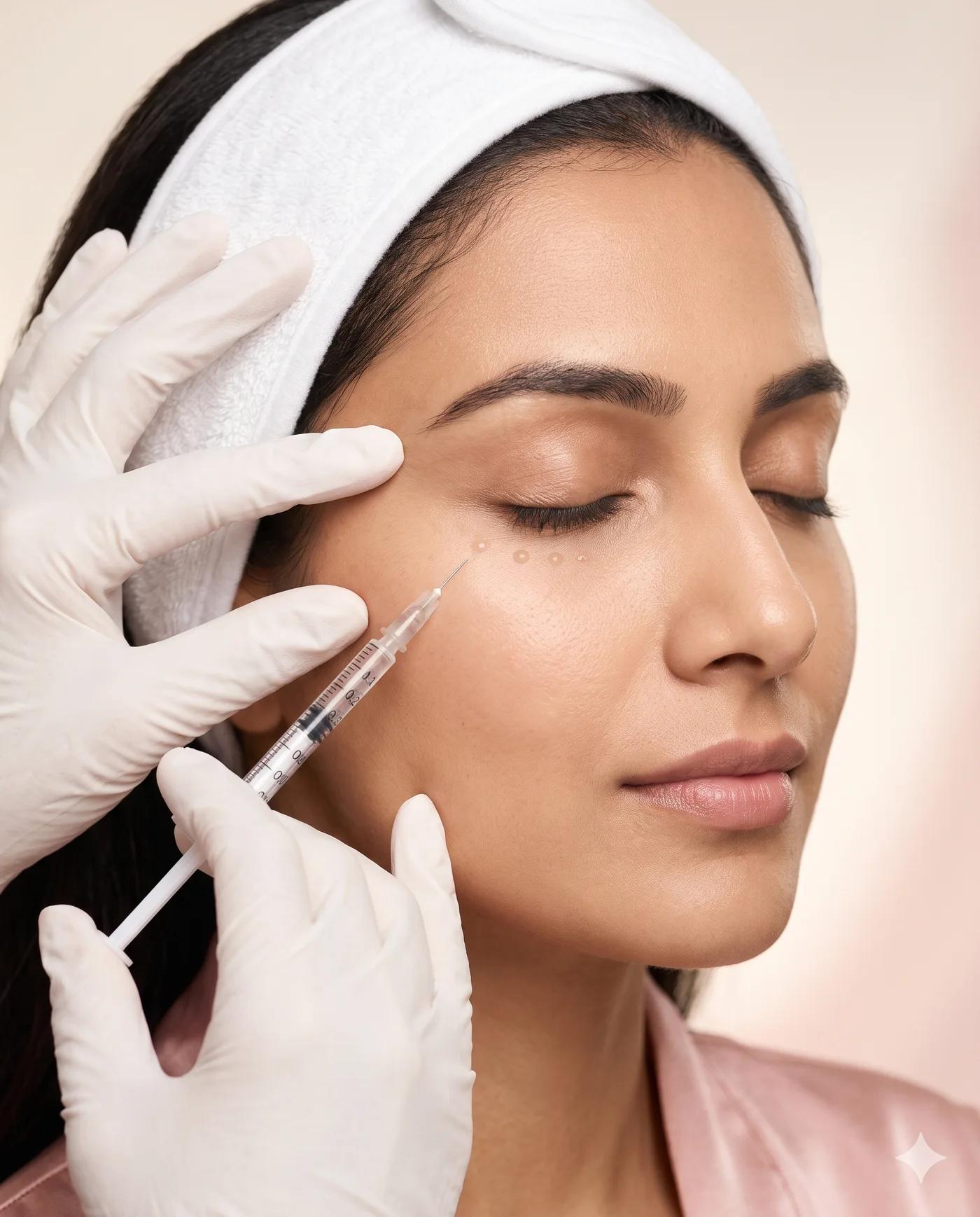
What is Polynucleotides?
Polynucleotides are purified DNA fragments injected into the skin in very small amounts. They are used to improve skin quality where it is thin and fragile, most often under the eyes, where filler is not always a good choice.
Also known as: PDRN, Polynucleotides, PN, Salmon DNA, Salmon sperm facial, Rejuran
How it works
They are thought to support the skin’s own repair processes and blood supply, gradually improving thickness and hydration. The research is promising but still growing, and we will tell you where it stands.
Concerns it is used for
What to expect
- Before
We work out what is actually causing your dark circles: pigment, hollowing, thin skin or visible vessels. Each needs a different answer.
- During
A series of tiny injections with numbing cream.
- After
Expect small raised points for a day. Improvement is gradual over the course.
Risks and honest caveats
Derived from fish DNA, so not suitable if you have a fish allergy. Bruising under the eyes is common. Dark circles from pigment or genetics may respond only partly.
Your doctor will go through these with you, along with the alternatives, before you decide.
Who should avoid it
Not suitable for people with a fish or seafood allergy, during pregnancy or breastfeeding, or with active infection at the treatment site.
How it compares
Polynucleotides vs under-eye filler
Filler fills a hollow. Polynucleotides aim to improve the quality and thickness of the skin itself. Where dark circles come from thin skin or where filler would risk puffiness, polynucleotides are often the safer first choice.
What affects the cost of Polynucleotides
The cost is individual, because no two plans are the same. You are given a written figure at your consultation, before you commit to anything. It depends on:
- The area or number of areas treated
- The amount and brand of product used
- How many sessions your plan needs
- Whether treatments are combined in one visit
Common questions about Polynucleotides
What is PDRN?
PDRN stands for polydeoxyribonucleotide: purified DNA fragments, usually derived from salmon, injected into the skin in small amounts to support repair and improve skin quality.
Why salmon DNA?
Salmon DNA is used because it is highly purified and well tolerated by human tissue. It contains no fish protein in meaningful amounts, but people with fish allergy are still advised against it.
How long does Polynucleotides take?
A session usually takes 30 – 40 minutes. A series of tiny injections with numbing cream.
Is there any downtime after Polynucleotides?
Small bumps and possible bruising for 1 – 3 days. Expect small raised points for a day. Improvement is gradual over the course.
How many sessions of Polynucleotides will I need?
Usually 3 sessions, 2 – 4 weeks apart. The exact number depends on your assessment and how you respond.
How long do the results of Polynucleotides last?
Around 6 months, with maintenance. Results vary from person to person and are not guaranteed.
What are the risks of Polynucleotides?
Derived from fish DNA, so not suitable if you have a fish allergy. Bruising under the eyes is common. Dark circles from pigment or genetics may respond only partly.
This page is general information, not a diagnosis or personal medical advice. Suitability, risks, recovery and results vary and are confirmed only after an in-person assessment by a doctor. No particular result is guaranteed.