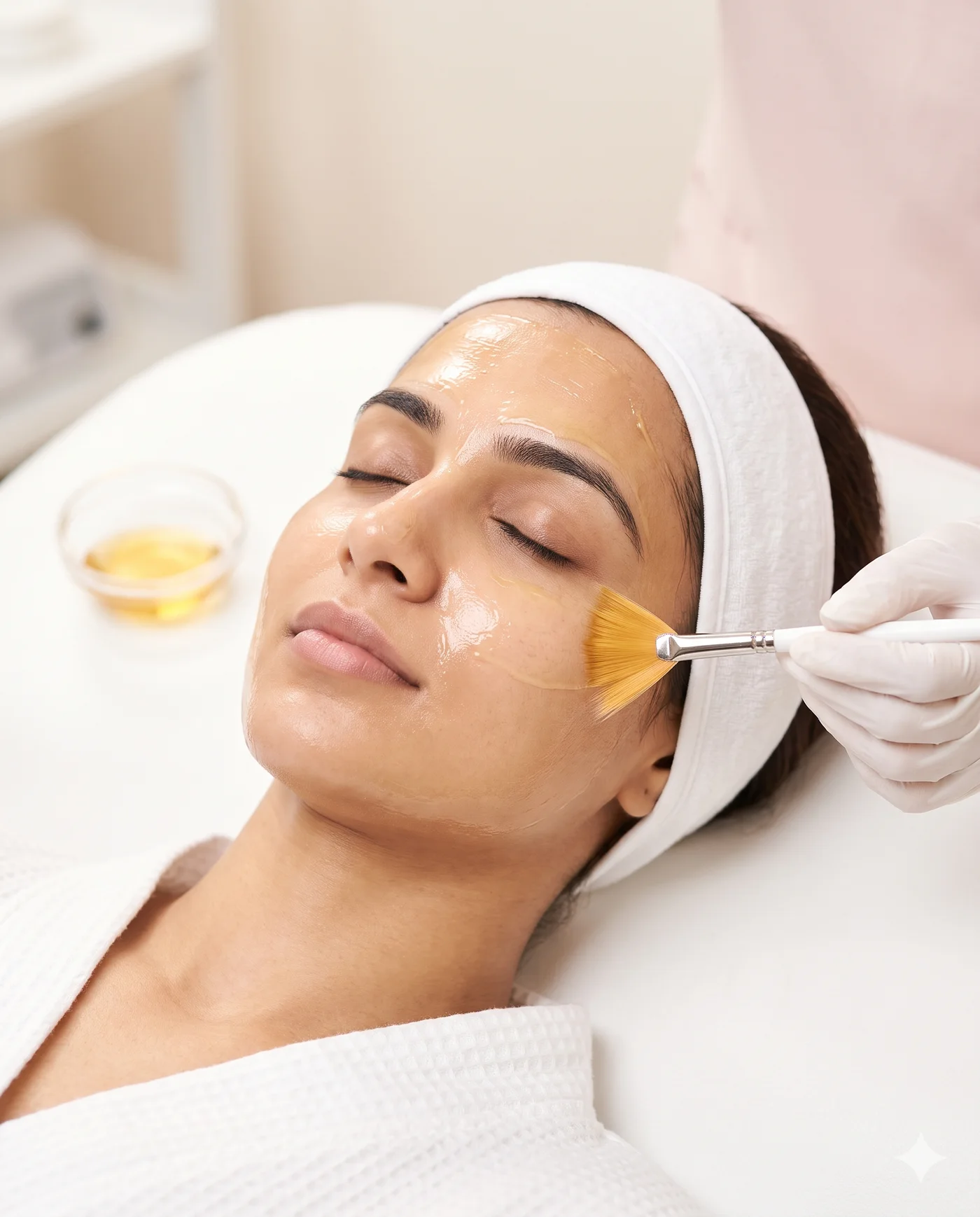
What is Chemical peels?
A chemical peel is a solution of acids applied to the skin for a few minutes to remove damaged surface cells and prompt fresh skin to form. Different acids do different jobs, so the peel is chosen for your concern. One type unclogs pores and calms acne, another refines open pores and texture, and another fades pigmentation and marks. Peels are done as a course, and gentle peels repeated are safer for Indian skin than one strong peel.
Also known as: Chemical peel, Acne peel, Salicylic acid peel, Glycolic peel, Mandelic peel, Pigmentation peel, Open pores treatment, Skin peeling treatment
How it works
Salicylic acid dissolves oil inside the pore, so it is used for acne and blackheads. Glycolic and mandelic acids loosen dull surface cells, which smooths texture and makes pores look smaller. Pigment-correcting peels combine acids that lift pigmented cells with ingredients that slow new pigment forming.
Concerns it is used for
What to expect
- Before
Your doctor identifies the concern and skin type and picks the peel. You stop retinoids and scrubs for a few days, and start daily sunscreen if you have not already.
- During
The skin is cleansed and the peel applied for a few minutes. It tingles or feels warm, then it is neutralised or left to self-neutralise, depending on the peel.
- After
Moisturise, use sunscreen every day and do not pick any flaking skin. Avoid waxing, threading and bleaching on the area for a week.
Risks and honest caveats
Redness, dryness and light flaking are expected. Acne can briefly flare after the first session as pores clear. Irritation, burns and dark or light patches are uncommon but possible, more so with sun exposure or if skin is picked. Peels are generally avoided in pregnancy, on broken skin and over active cold sores, and need a gap after isotretinoin.
Your doctor will go through these with you, along with the alternatives, before you decide.
Who should avoid it
Not done during pregnancy without medical advice, over sunburn, broken skin, eczema or active cold sores, or within a few days of waxing or laser. A waiting period is needed after isotretinoin. People prone to keloid scars or with very sensitive skin need individual assessment.
How it compares
Which peel for which concern
For acne and blackheads, a salicylic acid peel works inside the oily pore. For open pores and rough texture, glycolic or mandelic acid peels smooth the surface. For pigmentation and marks, a pigment-correcting peel is combined with prescribed creams and sunscreen. For stubborn melasma or a deeper result with little visible peeling, BioRePeel is the next step. For a one-off glow before an event, the lactic acid party peel is the gentlest.
What affects the cost of Chemical peels
The cost is individual, because no two plans are the same. You are given a written figure at your consultation, before you commit to anything. It depends on:
- The area or number of areas treated
- The amount and brand of product used
- How many sessions your plan needs
- Whether treatments are combined in one visit
Common questions about Chemical peels
What is a chemical peel?
A chemical peel is a medical treatment in which an acid solution is applied to the skin for a few minutes to remove damaged surface cells and stimulate fresh skin. The type and strength are chosen for the concern being treated.
Which peel is best for acne?
Salicylic acid peels are the most commonly used for acne, because salicylic acid dissolves oil and works inside the pore. They are done as a course alongside prescribed acne treatment.
Can a chemical peel reduce open pores?
Pores cannot be closed, but peels clear the oil and dead cells that stretch them and smooth the surrounding skin, so they look smaller. Results are maintained with regular sessions and good skincare.
Are chemical peels safe for Indian skin?
Yes, when a suitable peel is used and sun protection is strict. Superficial peels done as a series carry the lowest risk of dark marks.
How long does Chemical peels take?
A session usually takes 20 – 30 minutes. The skin is cleansed and the peel applied for a few minutes. It tingles or feels warm, then it is neutralised or left to self-neutralise, depending on the peel.
Is there any downtime after Chemical peels?
Little; mild dryness or flaking for 2 – 5 days. Moisturise, use sunscreen every day and do not pick any flaking skin. Avoid waxing, threading and bleaching on the area for a week.
How many sessions of Chemical peels will I need?
Usually a course of 4 – 6, every 2 – 3 weeks. The exact number depends on your assessment and how you respond.
How long do the results of Chemical peels last?
Maintained with occasional sessions, sunscreen and home care. Results vary from person to person and are not guaranteed.
What are the risks of Chemical peels?
Redness, dryness and light flaking are expected. Acne can briefly flare after the first session as pores clear. Irritation, burns and dark or light patches are uncommon but possible, more so with sun exposure or if skin is picked. Peels are generally avoided in pregnancy, on broken skin and over active cold sores, and need a gap after isotretinoin.
This page is general information, not a diagnosis or personal medical advice. Suitability, risks, recovery and results vary and are confirmed only after an in-person assessment by a doctor. No particular result is guaranteed.