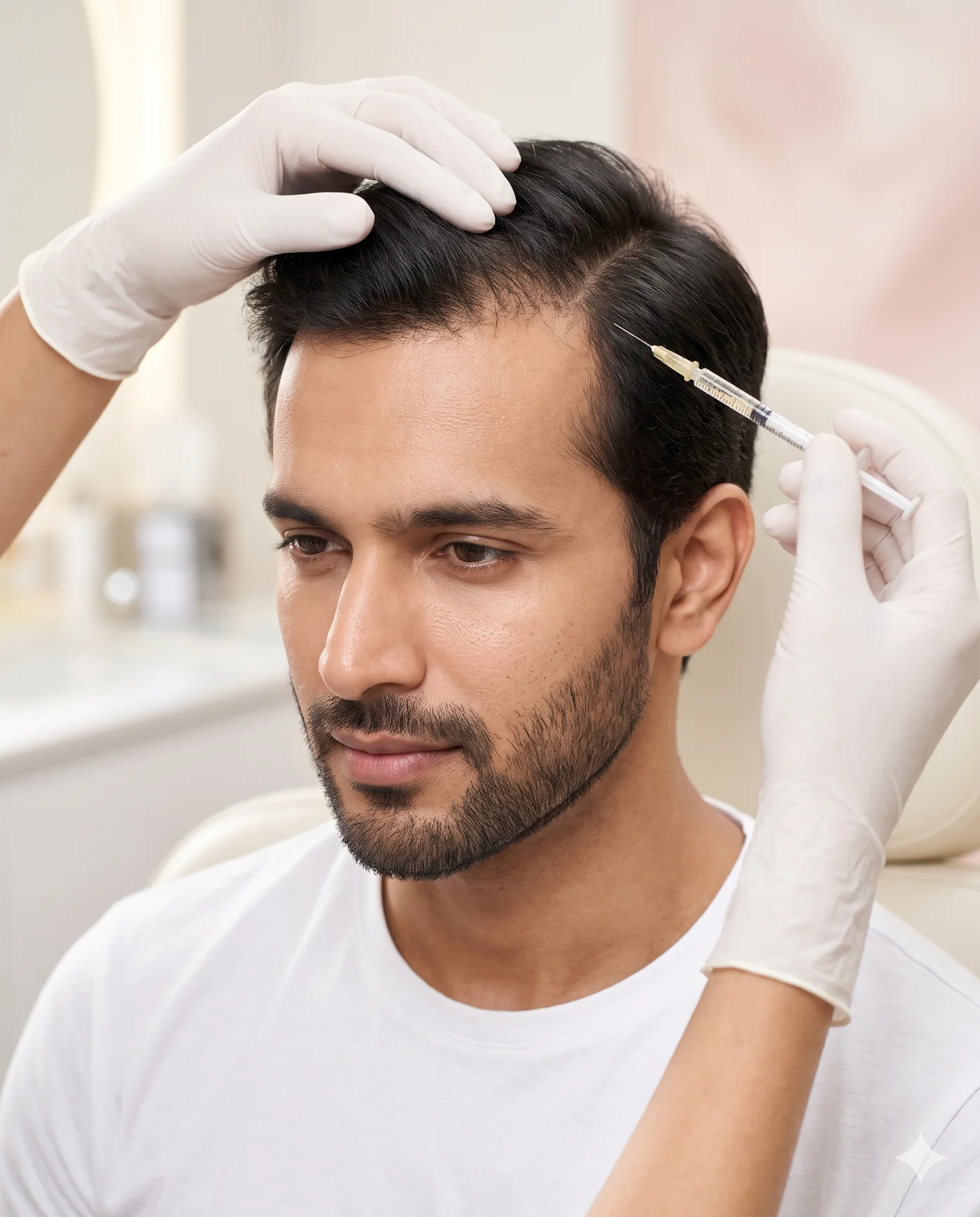
What is GFC hair treatment?
GFC stands for growth factor concentrate. A small sample of your blood is processed to release the growth factors from your platelets, and this clear concentrate is injected into the scalp. It is a refinement of PRP therapy and is used to slow shedding and thicken existing hair.
Also known as: GFC, Growth factor concentrate, GFC therapy, PRP hair treatment, Platelet-rich plasma
How it works
Growth factors signal the hair follicles and support the blood supply around them. The aim is to keep follicles in their growing phase for longer. It works on thinning hair, not on areas that are already bald.
Concerns it is used for
What to expect
- Before
A scalp examination and, where needed, blood tests to look for causes such as thyroid, iron or vitamin deficiency.
- During
A blood draw, a short wait while it is prepared, then small injections across the thinning areas.
- After
Wash your hair the next day. Changes in shedding are usually noticed first, then thickness over several months.
Risks and honest caveats
Response varies and cannot be guaranteed. Pattern hair loss is ongoing, so results need maintenance and usually work best alongside prescribed treatment. Soreness and brief swelling are common.
Your doctor will go through these with you, along with the alternatives, before you decide.
Who should avoid it
Not suitable with blood or platelet disorders, active scalp infection, uncontrolled illness, or while taking blood thinners without medical advice. Generally deferred in pregnancy.
How it compares
GFC vs PRP
Both come from your own blood. PRP injects concentrated platelets, which release growth factors after injection. GFC activates the platelets in the tube first and injects only the released growth factors, as a clear fluid without cells. Many people find GFC less painful.
What affects the cost of GFC hair treatment
The cost is individual, because no two plans are the same. You are given a written figure at your consultation, before you commit to anything. It depends on:
- The area or number of areas treated
- The amount and brand of product used
- How many sessions your plan needs
- Whether treatments are combined in one visit
Common questions about GFC hair treatment
What is GFC?
GFC stands for growth factor concentrate. It is prepared from a small sample of your own blood and injected into the scalp to support thinning hair.
Is GFC a permanent cure for hair loss?
No. Pattern hair loss is a continuing process. GFC can slow shedding and thicken existing hair, and it needs maintenance sessions and usually medical treatment alongside.
How long does GFC hair treatment take?
A session usually takes 45 – 60 minutes. A blood draw, a short wait while it is prepared, then small injections across the thinning areas.
Is there any downtime after GFC hair treatment?
Scalp tenderness for a day. Wash your hair the next day. Changes in shedding are usually noticed first, then thickness over several months.
How many sessions of GFC hair treatment will I need?
Usually 3 – 4, a month apart, then maintenance. The exact number depends on your assessment and how you respond.
How long do the results of GFC hair treatment last?
Maintained with sessions every few months. Results vary from person to person and are not guaranteed.
What are the risks of GFC hair treatment?
Response varies and cannot be guaranteed. Pattern hair loss is ongoing, so results need maintenance and usually work best alongside prescribed treatment. Soreness and brief swelling are common.
This page is general information, not a diagnosis or personal medical advice. Suitability, risks, recovery and results vary and are confirmed only after an in-person assessment by a doctor. No particular result is guaranteed.