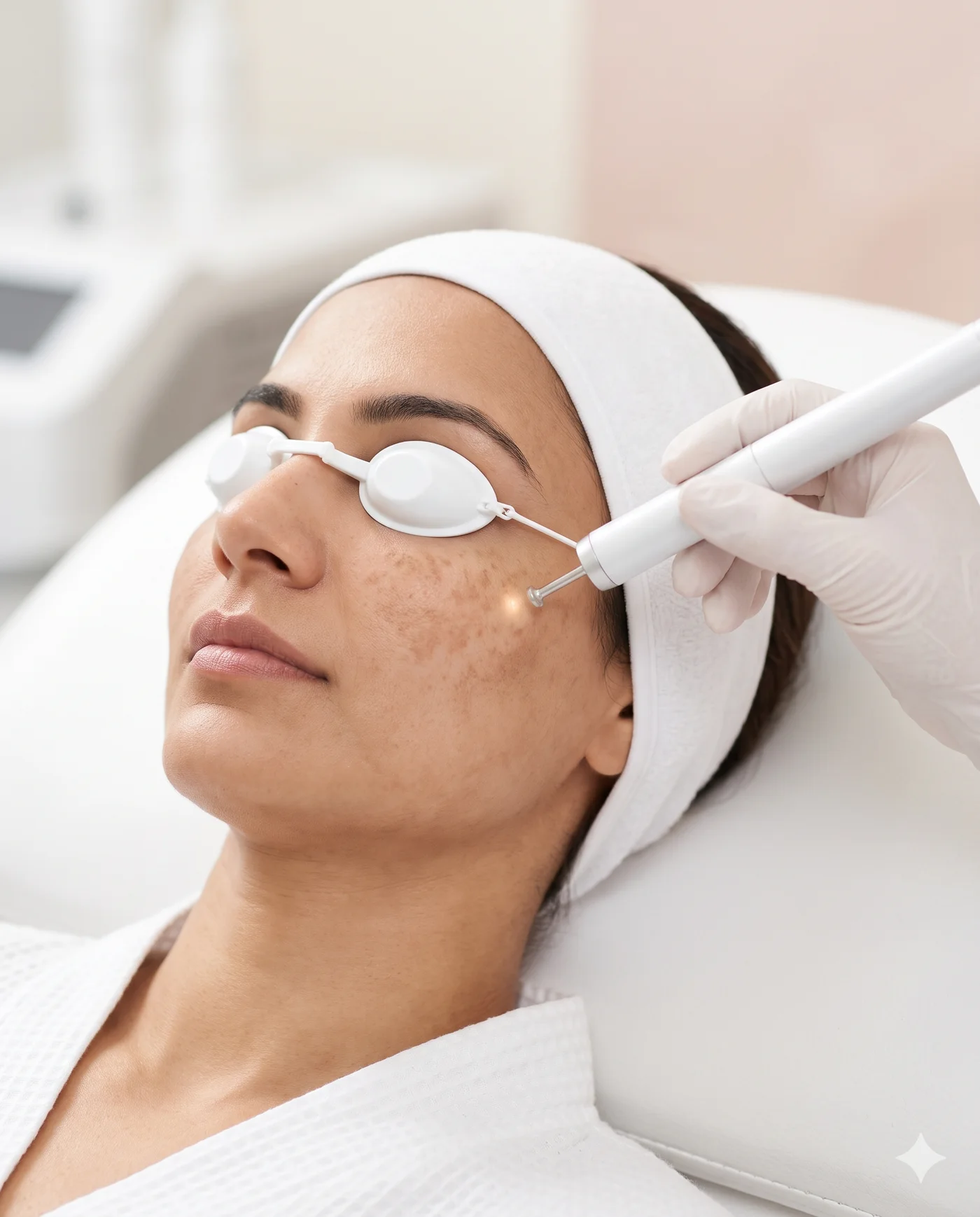
What is Pico laser?
A pico laser delivers extremely short pulses of light that break pigment into tiny fragments, which your body then clears away. Because the pulses are so brief, less heat reaches the surrounding skin, which matters for Indian skin tones that mark easily.
Also known as: Pico laser, Picosecond laser, Laser toning, Laser pigmentation removal, Laser tattoo removal, Q-switched laser
How it works
The pulse shatters pigment or ink particles rather than heating them. Your immune system removes the fragments over the following weeks.
Concerns it is used for
What to expect
- Before
We identify the type and depth of pigment first. Melasma in particular needs a plan that includes creams and sun protection, not laser alone.
- During
Numbing cream if needed. The pulses feel like quick flicks.
- After
Daily sunscreen is essential. Treated spots may darken before they lift.
Risks and honest caveats
Laser can itself cause darker or lighter patches, especially on deeper skin tones or after sun exposure. Melasma can flare or return. Some tattoo colours respond poorly, and complete removal cannot be promised.
Your doctor will go through these with you, along with the alternatives, before you decide.
Who should avoid it
Postponed with a recent tan, active infection or eczema in the area, and during pregnancy. People taking isotretinoin or with a history of keloids need individual assessment.
How it compares
Pico laser vs Q-switched laser
Both break up pigment. A Q-switched laser uses pulses measured in nanoseconds; a pico laser uses pulses about a thousand times shorter. Shorter pulses shatter pigment with less heat, which can mean fewer sessions and a lower risk of marks on darker skin.
What affects the cost of Pico laser
The cost is individual, because no two plans are the same. You are given a written figure at your consultation, before you commit to anything. It depends on:
- The area or number of areas treated
- The amount and brand of product used
- How many sessions your plan needs
- Whether treatments are combined in one visit
Common questions about Pico laser
What is a pico laser?
A pico laser delivers energy in picoseconds, which are trillionths of a second. The very short pulse breaks pigment or tattoo ink into fine particles that the body then clears.
Can a tattoo be removed completely?
Many black tattoos fade to the point of being barely visible. Coloured inks, particularly green, blue and yellow, are harder, and a faint shadow can remain. Complete removal cannot be promised.
How long does Pico laser take?
A session usually takes 15 – 40 minutes. Numbing cream if needed. The pulses feel like quick flicks.
Is there any downtime after Pico laser?
1 – 3 days of redness; tattoos may crust for a week. Daily sunscreen is essential. Treated spots may darken before they lift.
How many sessions of Pico laser will I need?
Pigmentation: often 3 – 6. Tattoos: often 6 – 10 or more. The exact number depends on your assessment and how you respond.
How long do the results of Pico laser last?
Cleared pigment can return with sun and hormones; cleared ink does not. Results vary from person to person and are not guaranteed.
What are the risks of Pico laser?
Laser can itself cause darker or lighter patches, especially on deeper skin tones or after sun exposure. Melasma can flare or return. Some tattoo colours respond poorly, and complete removal cannot be promised.
This page is general information, not a diagnosis or personal medical advice. Suitability, risks, recovery and results vary and are confirmed only after an in-person assessment by a doctor. No particular result is guaranteed.