“I look tired even when I am not”
Dark Circles & Under-Eye Treatment
Dark circles are one of the hardest concerns to treat well, because four different things cause them and they often overlap. An eye cream cannot fix a hollow, and filler cannot fix pigment.
Medically reviewed by Dr. Pradeep, MD, MBA
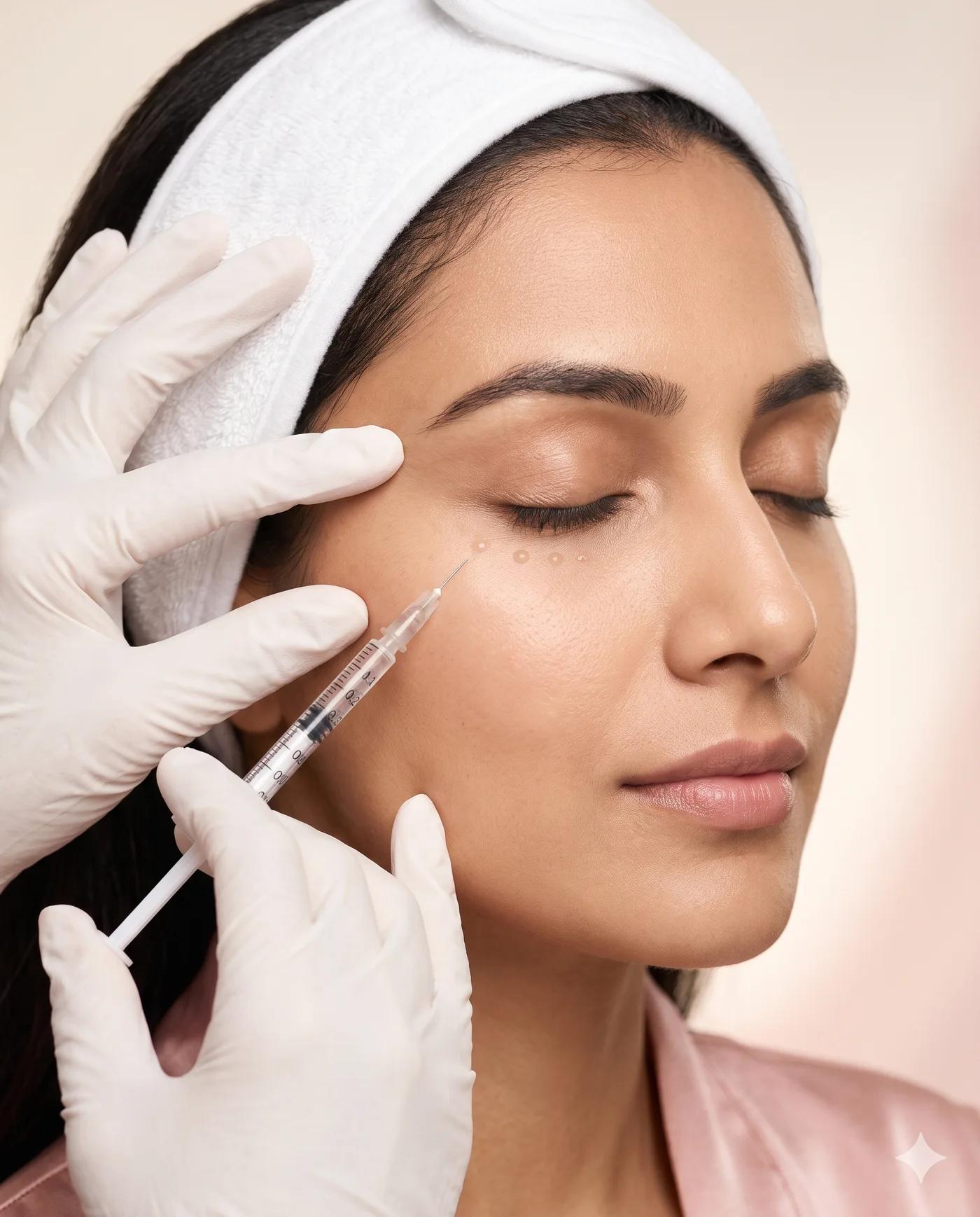
Understand it first
What is usually behind it
- Hollowing
- A groove under the eye casts a shadow. Carefully placed filler may help selected people.
- Pigment
- True brown darkening of the skin, common in Indian families. Treated with creams and gentle peels.
- Thin skin
- Vessels show through as a bluish tint. Polynucleotides aim to improve skin thickness.
- Puffiness
- Fluid or fat pads create a shadow below. Injections do not help this, and may make it worse.
Our approach
How we treat it
We examine you in good light, at rest and looking up, to see which factors apply. Many people need a combination. The under-eye is unforgiving, so we treat it conservatively and are clear when improvement will be partial.
Treatments we may discuss
- PolynucleotidesA repair-focused skin booster, often chosen for the delicate under-eye area.30 – 40 minutesDowntime: small bumps and possible bruising for 1 – 3 days
- Dermal fillersRestores volume and shape in the lips, cheeks, chin, jawline and under-eyes.30 – 45 minutesDowntime: mild swelling or bruising for 2 – 5 days
- MesotherapyMeso cocktails of vitamins, hyaluronic acid, amino acids and peptides, for skin glow and for hair.30 – 45 minutesDowntime: redness and small marks for about a day
Questions
What people ask us
Can dark circles be removed permanently?
They can usually be improved, sometimes considerably, but hereditary dark circles rarely disappear entirely. The realistic aim is to look less tired.
Is under-eye filler safe?
In the right candidate and in experienced hands it can work well. It is not suitable for everyone: puffiness, very thin skin or fluid retention make it a poor choice, and we will advise against it in those cases.
What are polynucleotides?
They are purified DNA fragments injected in tiny amounts to support skin repair and thickness. They are often chosen for the under-eye area when filler is not appropriate.
This page is general information, not a diagnosis or personal medical advice. Suitability, risks, recovery and results vary and are confirmed only after an in-person assessment by a doctor. No particular result is guaranteed.
The first step is a conversation
Not sure which applies to you? That is our job.
A consultation is time with a doctor: your concern, your options, the risks and the likely cost. There is no obligation to book a treatment, and we will tell you if you do not need one.